Nov 14, 2025
Articles
Building the ERP3.0: An Agentic System of Action

Ryan Gralia

The story of the ERP begins more than five millennia ago.
In the fertile crescent of Mesopotamia, clay tablets were used to record grain and labor as humanity shifted from nomadic life to farming. Cultivating founder crops for the first time was a fundamental technology shift and altered the course of human history.
Paper unlocked more scalable record keeping. The printing press followed and spread Luca Pacioli’s treatise on double-entry bookkeeping. This ledger model became the foundation of business transactions for centuries.
The mechanical age replaced handwriting with typewriters. By the 1950s, the computer age had arrived and companies began transitioning to electronic data processing. SAP, founded in 1972 by former IBM engineers, became an early leader with a focus on manufacturing.
Gartner introduced the term ERP in the 1990s after the rise of the PC and the spreadsheet. Intuit, Microsoft Dynamics and Sage grew into major players as businesses adopted software to manage financial operations.
The next transformation arrived with cloud computing. NetSuite showed that finance could run in the cloud. Workday and Xero scaled the approach and defined ERP 2.0. It placed the ledger online and made it accessible from anywhere.
Today we are experiencing the most significant technological shift in human history. Intelligence now sits at the center of how companies operate. Small, exceptional teams achieve levels of leverage that once required entire departments. They work continuously and act on real-time data. Founders have already changed how companies are built. Their systems have not kept pace.
The ERP remains stuck. Teams still work around static systems. Operators rely on point solutions, manual processes and brittle integrations to keep the business functioning. Legacy vendors continue migrating customers off old platforms and some now end support instead of improving the system. Others restrict how data can be used and what third parties can build. These choices preserve the past at the moment modern companies need systems that evolve with them. The gap between how companies operate and how their systems behave has never been wider. AI moved forward. The ERP did not.
ERP 3.0 is being written now by the people who need it most. The founders and operators shaping the next generation of companies.
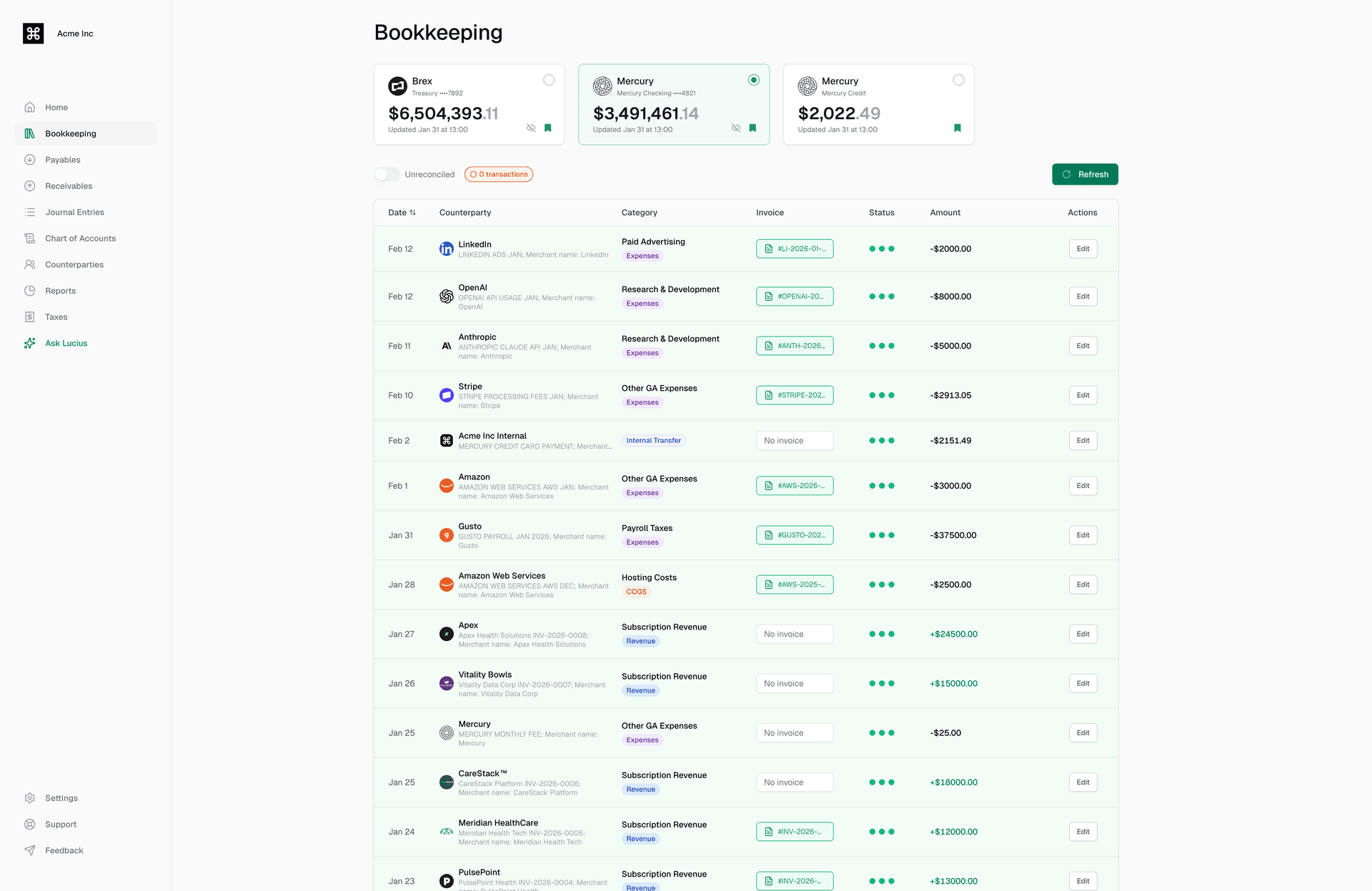
ERP 3.0 introduces systems that understand the business and respond to it. The ledger becomes a living model that adjusts as operations change and maintains audit-ready accuracy without forcing teams into manual work. Intelligence sits inside the system and supports decisions as they happen. Agents handle the operational load and keep information moving cleanly across the company.
Modern teams already produce large amounts of structured and unstructured data every day. ERP 3.0 reflects this reality. Information moves across the business normalized, enriched and reconciled without human intervention. The system maintains a real-time view of the company so decisions are based on what is actually happening.
This is not about replacing people. It is about giving them leverage. Human-in-the-loop services remain essential. Teams design, implement and verify. They maintain financial controls and approvals. They operate at a higher level. Work that once consumed days happens automatically. The system carries the operational weight so founders can focus on building and making decisions that matter.
ERP 1.0 digitized the ledger.
ERP 2.0 moved it to the cloud.
ERP 3.0 introduces systems that learn, adapt and act for the business.
With Lucius, operations run continuously. The system learns from the company, understands intent and anticipates what needs to happen next. Bookkeepers and accountants deliver higher-quality work because the system supports them rather than limits them. Founders build faster because their ERP finally matches their pace and ambition. The system does its job so they can do theirs.
The story of the ERP began thousands of years ago. The next chapter begins now. ERP 3.0 is not an upgrade. It is a new foundation for how modern companies build, operate and scale. It is designed for the people who are already rewriting the future.
The story of the ERP begins more than five millennia ago.
In the fertile crescent of Mesopotamia, clay tablets were used to record grain and labor as humanity shifted from nomadic life to farming. Cultivating founder crops for the first time was a fundamental technology shift and altered the course of human history.
Paper unlocked more scalable record keeping. The printing press followed and spread Luca Pacioli’s treatise on double-entry bookkeeping. This ledger model became the foundation of business transactions for centuries.
The mechanical age replaced handwriting with typewriters. By the 1950s, the computer age had arrived and companies began transitioning to electronic data processing. SAP, founded in 1972 by former IBM engineers, became an early leader with a focus on manufacturing.
Gartner introduced the term ERP in the 1990s after the rise of the PC and the spreadsheet. Intuit, Microsoft Dynamics and Sage grew into major players as businesses adopted software to manage financial operations.
The next transformation arrived with cloud computing. NetSuite showed that finance could run in the cloud. Workday and Xero scaled the approach and defined ERP 2.0. It placed the ledger online and made it accessible from anywhere.
Today we are experiencing the most significant technological shift in human history. Intelligence now sits at the center of how companies operate. Small, exceptional teams achieve levels of leverage that once required entire departments. They work continuously and act on real-time data. Founders have already changed how companies are built. Their systems have not kept pace.
The ERP remains stuck. Teams still work around static systems. Operators rely on point solutions, manual processes and brittle integrations to keep the business functioning. Legacy vendors continue migrating customers off old platforms and some now end support instead of improving the system. Others restrict how data can be used and what third parties can build. These choices preserve the past at the moment modern companies need systems that evolve with them. The gap between how companies operate and how their systems behave has never been wider. AI moved forward. The ERP did not.
ERP 3.0 is being written now by the people who need it most. The founders and operators shaping the next generation of companies.
ERP 3.0 introduces systems that understand the business and respond to it. The ledger becomes a living model that adjusts as operations change and maintains audit-ready accuracy without forcing teams into manual work. Intelligence sits inside the system and supports decisions as they happen. Agents handle the operational load and keep information moving cleanly across the company.
Modern teams already produce large amounts of structured and unstructured data every day. ERP 3.0 reflects this reality. Information moves across the business normalized, enriched and reconciled without human intervention. The system maintains a real-time view of the company so decisions are based on what is actually happening.
This is not about replacing people. It is about giving them leverage. Human-in-the-loop services remain essential. Teams design, implement and verify. They maintain financial controls and approvals. They operate at a higher level. Work that once consumed days happens automatically. The system carries the operational weight so founders can focus on building and making decisions that matter.
ERP 1.0 digitized the ledger.
ERP 2.0 moved it to the cloud.
ERP 3.0 introduces systems that learn, adapt and act for the business.
With Lucius, operations run continuously. The system learns from the company, understands intent and anticipates what needs to happen next. Bookkeepers and accountants deliver higher-quality work because the system supports them rather than limits them. Founders build faster because their ERP finally matches their pace and ambition. The system does its job so they can do theirs.
The story of the ERP began thousands of years ago. The next chapter begins now. ERP 3.0 is not an upgrade. It is a new foundation for how modern companies build, operate and scale. It is designed for the people who are already rewriting the future.
The story of the ERP begins more than five millennia ago.
In the fertile crescent of Mesopotamia, clay tablets were used to record grain and labor as humanity shifted from nomadic life to farming. Cultivating founder crops for the first time was a fundamental technology shift and altered the course of human history.
Paper unlocked more scalable record keeping. The printing press followed and spread Luca Pacioli’s treatise on double-entry bookkeeping. This ledger model became the foundation of business transactions for centuries.
The mechanical age replaced handwriting with typewriters. By the 1950s, the computer age had arrived and companies began transitioning to electronic data processing. SAP, founded in 1972 by former IBM engineers, became an early leader with a focus on manufacturing.
Gartner introduced the term ERP in the 1990s after the rise of the PC and the spreadsheet. Intuit, Microsoft Dynamics and Sage grew into major players as businesses adopted software to manage financial operations.
The next transformation arrived with cloud computing. NetSuite showed that finance could run in the cloud. Workday and Xero scaled the approach and defined ERP 2.0. It placed the ledger online and made it accessible from anywhere.
Today we are experiencing the most significant technological shift in human history. Intelligence now sits at the center of how companies operate. Small, exceptional teams achieve levels of leverage that once required entire departments. They work continuously and act on real-time data. Founders have already changed how companies are built. Their systems have not kept pace.
The ERP remains stuck. Teams still work around static systems. Operators rely on point solutions, manual processes and brittle integrations to keep the business functioning. Legacy vendors continue migrating customers off old platforms and some now end support instead of improving the system. Others restrict how data can be used and what third parties can build. These choices preserve the past at the moment modern companies need systems that evolve with them. The gap between how companies operate and how their systems behave has never been wider. AI moved forward. The ERP did not.
ERP 3.0 is being written now by the people who need it most. The founders and operators shaping the next generation of companies.
ERP 3.0 introduces systems that understand the business and respond to it. The ledger becomes a living model that adjusts as operations change and maintains audit-ready accuracy without forcing teams into manual work. Intelligence sits inside the system and supports decisions as they happen. Agents handle the operational load and keep information moving cleanly across the company.
Modern teams already produce large amounts of structured and unstructured data every day. ERP 3.0 reflects this reality. Information moves across the business normalized, enriched and reconciled without human intervention. The system maintains a real-time view of the company so decisions are based on what is actually happening.
This is not about replacing people. It is about giving them leverage. Human-in-the-loop services remain essential. Teams design, implement and verify. They maintain financial controls and approvals. They operate at a higher level. Work that once consumed days happens automatically. The system carries the operational weight so founders can focus on building and making decisions that matter.
ERP 1.0 digitized the ledger.
ERP 2.0 moved it to the cloud.
ERP 3.0 introduces systems that learn, adapt and act for the business.
With Lucius, operations run continuously. The system learns from the company, understands intent and anticipates what needs to happen next. Bookkeepers and accountants deliver higher-quality work because the system supports them rather than limits them. Founders build faster because their ERP finally matches their pace and ambition. The system does its job so they can do theirs.
The story of the ERP began thousands of years ago. The next chapter begins now. ERP 3.0 is not an upgrade. It is a new foundation for how modern companies build, operate and scale. It is designed for the people who are already rewriting the future.
Nov 14, 2025
Say hello to Lucius
Financial Insights, Automated Accounting, Tax Filings and more. All in one powerful platform.
Say hello to Lucius
Financial Insights, Automated Accounting, Tax Filings and more. All in one powerful platform.